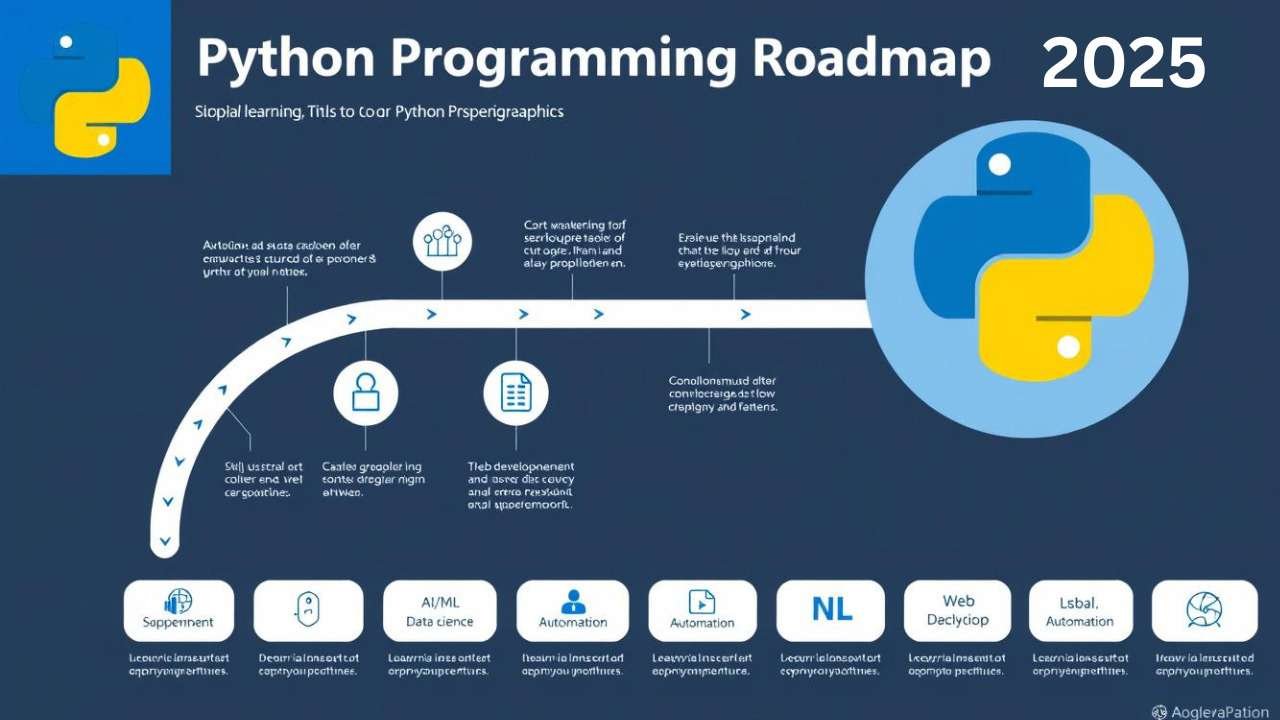
Python Programming Roadmap in 2025: Essential Skills, Tools, and Learning Paths
Why Python Remains Critical in 2025
Python’s dominance isn’t accidental. Its readability, versatility, and robust ecosystem have made it the language of choice across multiple domains. In 2025, several factors continue to drive Python’s relevance:
AI and Machine Learning
Python remains the undisputed leader in AI development. With frameworks like TensorFlow 3.0 and PyTorch 2.5, Python enables developers to build sophisticated machine learning models with unprecedented ease. The integration of large language models into everyday applications has further cemented Python’s position in this space.
Data Science Evolution
The explosion of data continues to drive demand for Python skills. Modern libraries like Polars and enhanced Pandas have made data processing faster and more efficient. Python’s data visualization capabilities have also evolved, with interactive dashboards becoming standard for data presentation.
Automation Everywhere
From DevOps to business process automation, Python has become the glue that connects disparate systems. Its simplicity makes it ideal for writing scripts that automate repetitive tasks, while frameworks like Airflow have standardized complex workflow automation.
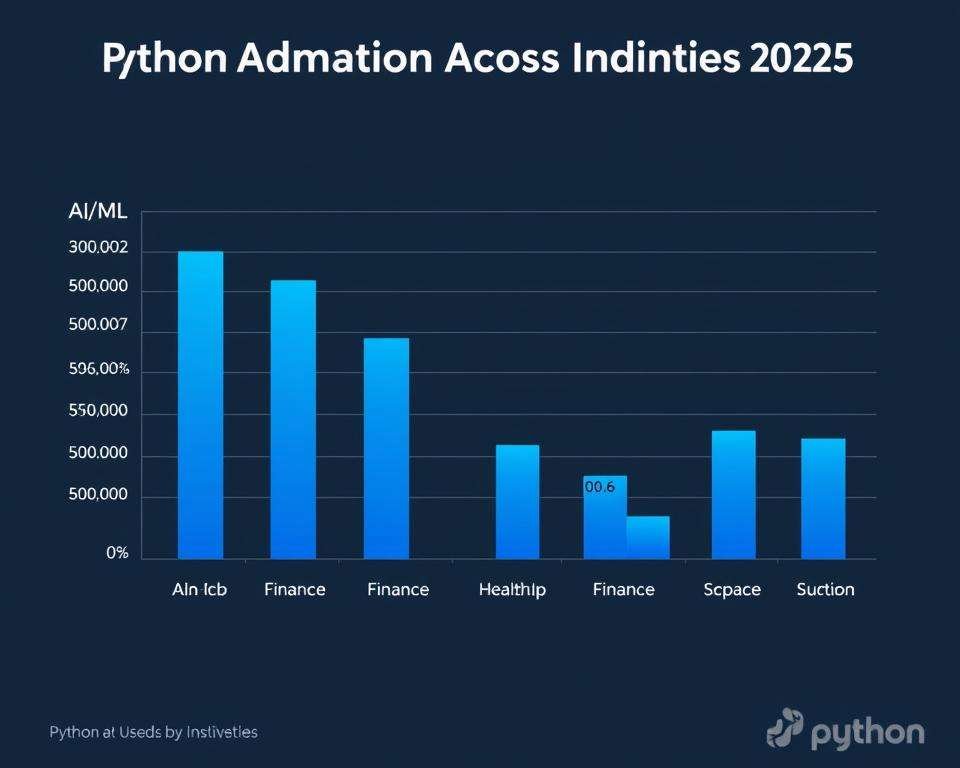
According to industry reports, Python developers remain among the highest-paid programmers in 2025, with specialized skills in AI and data science commanding premium salaries. The language’s continued evolution through Python 3.12 and beyond has addressed previous performance concerns, making it even more attractive for enterprise applications.
Structured Learning Path for 2025
Your journey to Python mastery in 2025 requires a structured approach. This roadmap is designed to take you from the fundamentals to specialized domains based on your career goals.
Foundation Phase (1-3 Months)
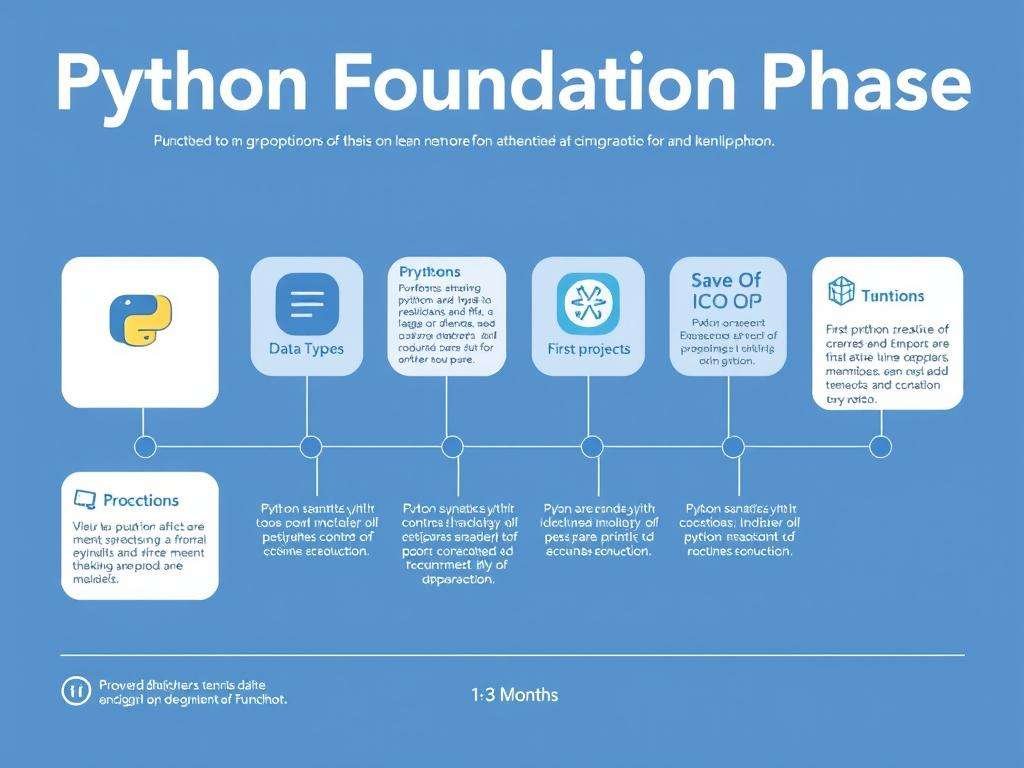
Core Python Fundamentals
- Python syntax and structure
- Variables, data types, and operators
- Control flow (if statements, loops)
- Functions and modules
- Error handling and exceptions
- File operations and I/O
Object-Oriented Programming
- Classes and objects
- Inheritance and polymorphism
- Encapsulation and abstraction
- Magic methods and operator overloading
- Modern OOP patterns in Python
During this phase, focus on building a solid foundation by practicing with small projects like a simple calculator, to-do list application, or basic data analysis script. Consistency is key—aim to code daily, even if just for 30 minutes.
Ready to Build Your Python Foundation?
Start with interactive exercises that reinforce fundamental concepts while building practical skills.
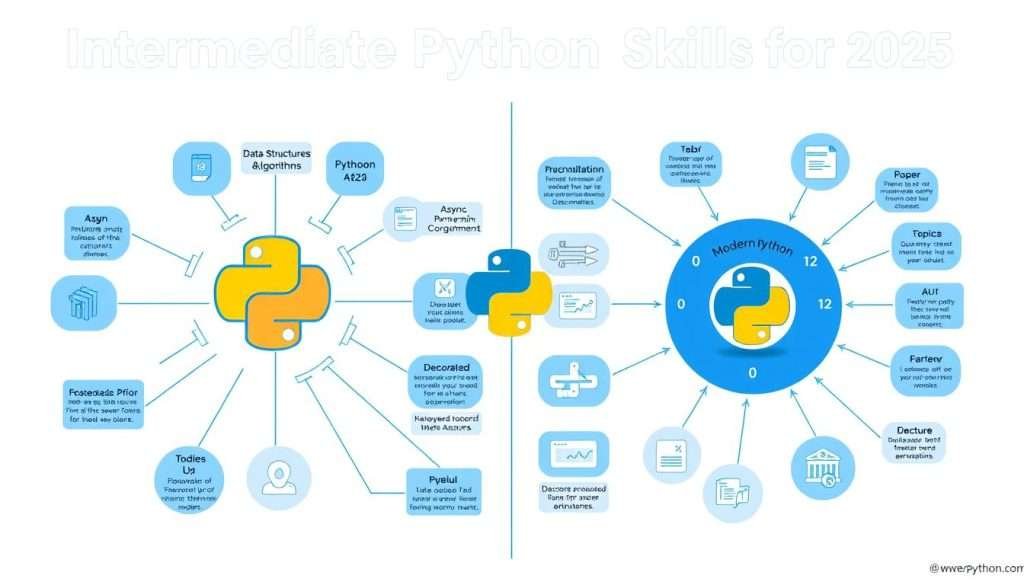
Intermediate Phase (2-4 Months)
Data Structures and Algorithms
- Lists, tuples, sets, and dictionaries
- Advanced list comprehensions
- Stacks, queues, and linked lists
- Sorting and searching algorithms
- Time and space complexity analysis
- Problem-solving strategies
Modern Python Features
- Type hints and annotations
- Async programming with asyncio
- Context managers and decorators
- Generators and iterators
- Functional programming concepts
- Python 3.12+ new features
At this stage, challenge yourself with more complex projects like a web scraper, data visualization dashboard, or automated file organizer. Start exploring specialized libraries relevant to your interests.
Advanced Phase (3-6 Months)
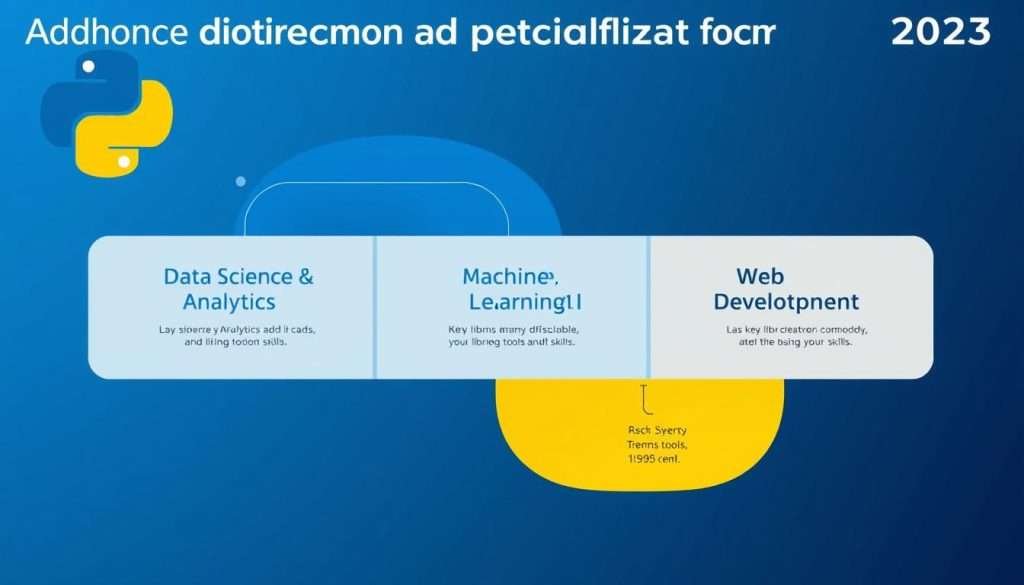
Data Science & Analytics Path
- Pandas and NumPy for data manipulation
- Polars for high-performance data processing
- Matplotlib, Seaborn, and Plotly for visualization
- Statistical analysis with SciPy and statsmodels
- Data cleaning and preprocessing techniques
- Dashboard creation with Streamlit or Dash
Machine Learning & AI Path
- Scikit-learn for classical ML algorithms
- Deep learning with PyTorch or TensorFlow
- Natural language processing with Transformers
- Computer vision with OpenCV and torchvision
- LangChain for AI agents and LLM applications
- MLOps tools for model deployment
Web Development Path
- FastAPI or Django for backend development
- API design and implementation
- Database integration (SQL and NoSQL)
- Authentication and security best practices
- Testing and deployment strategies
- Microservices architecture
During this phase, focus on building portfolio-worthy projects that demonstrate your specialized skills. Contribute to open-source projects to gain real-world experience and visibility in the community.
Emerging Python Trends for 2025
The Python ecosystem continues to evolve rapidly. Stay ahead of the curve by familiarizing yourself with these emerging trends:
Quantum Computing with Python
Python’s role in quantum computing has expanded significantly with libraries like Qiskit, Cirq, and PennyLane making quantum algorithms accessible to developers. In 2025, understanding how to leverage these tools for quantum machine learning and optimization problems is becoming a valuable specialized skill.
Python in Web3 and Blockchain
Python frameworks for blockchain development have matured, with libraries like web3.py and Brownie enabling developers to build decentralized applications. Smart contract testing, blockchain analytics, and cryptocurrency tools are increasingly being developed in Python.
Ethical AI Development
As AI regulation increases globally, Python libraries focused on fairness, explainability, and bias detection have become essential. Tools like AI Fairness 360 and SHAP for model interpretation are now standard components of responsible AI development workflows.
These emerging fields represent the cutting edge of Python development in 2025. While not essential for beginners, awareness of these trends can help you identify specialized career paths as you advance.
Must-Learn Python Tools and Libraries for 2025
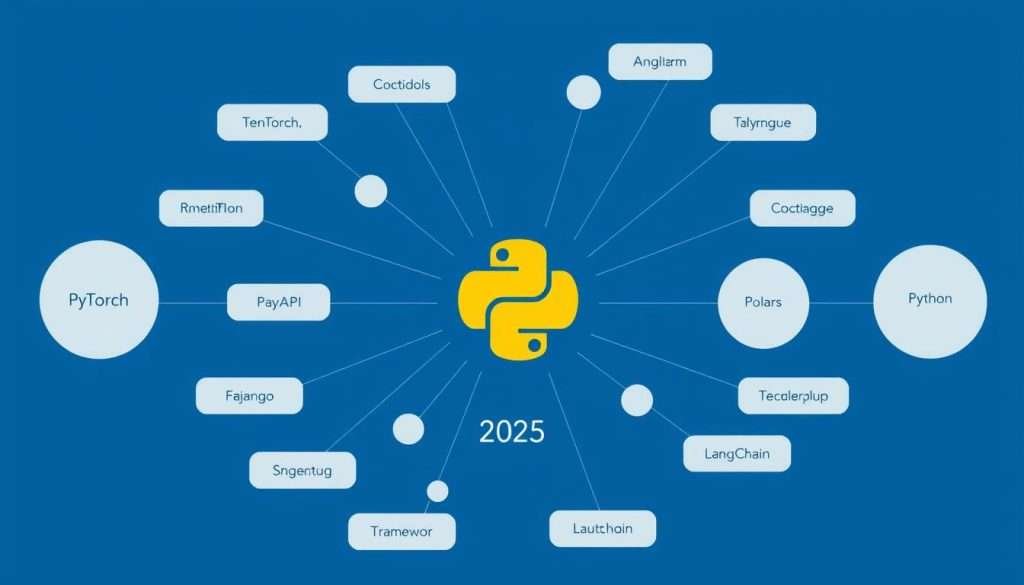
The Python ecosystem is vast, but certain tools and libraries have become essential for modern development. Here’s what you should prioritize in 2025:
| Category | Tool/Library | Description | Skill Level |
| Data Processing | Polars | Lightning-fast DataFrame library that’s replacing Pandas for large datasets | Intermediate |
| AI Development | LangChain | Framework for developing applications powered by language models | Advanced |
| Web Development | FastAPI | Modern, high-performance web framework for building APIs | Intermediate |
| DevOps | Poetry | Dependency management and packaging made easy | Beginner |
| Testing | Pytest | Powerful testing framework with simple syntax | Beginner |
| Data Visualization | Plotly | Interactive visualization library for complex data | Intermediate |
| Machine Learning | PyTorch 2.5 | Deep learning framework with dynamic computation graphs | Advanced |
| Automation | Airflow | Platform to programmatically author, schedule, and monitor workflows | Intermediate |
Beyond these specific tools, familiarize yourself with containerization (Docker), version control (Git), and cloud platforms (AWS, Azure, or GCP) as they’re frequently used alongside Python in professional environments.
Ready to Build Your Python Foundation?
Start with interactive exercises that reinforce fundamental concepts while building practical skills.
Building Future-Proof Python Projects
Theory alone isn’t enough—practical application through projects is essential for mastering Python. Here are actionable tips for building portfolio-worthy projects in 2025:
Project Ideas by Skill Level
Beginner Projects
- Personal finance tracker with data visualization
- Weather app using public APIs
- Automated file organizer with GUI
- Text-based adventure game
- Web scraper for news articles
Intermediate Projects
- Social media dashboard with sentiment analysis
- E-commerce recommendation system
- REST API with FastAPI and database integration
- Automated trading bot with backtesting
- Image recognition application
Advanced Projects
- AI-powered content generator with LLMs
- Full-stack web application with real-time features
- Predictive maintenance system using IoT data
- Blockchain application for supply chain tracking
- MLOps pipeline with automated retraining
Best Practices for Project Development
Technical Excellence
- Follow PEP 8 style guidelines for clean code
- Use type hints to improve code readability
- Implement comprehensive testing (unit, integration)
- Document your code with clear docstrings
- Leverage version control for tracking changes
- Implement error handling for robustness
Project Management
- Start with a clear problem statement
- Break down projects into manageable tasks
- Create a minimum viable product first
- Seek feedback early and often
- Document your process and decisions
- Share your work publicly (GitHub, blog posts)
When building projects, focus on solving real problems rather than just implementing technologies. Projects that demonstrate both technical skills and business value will stand out to potential employers or clients.
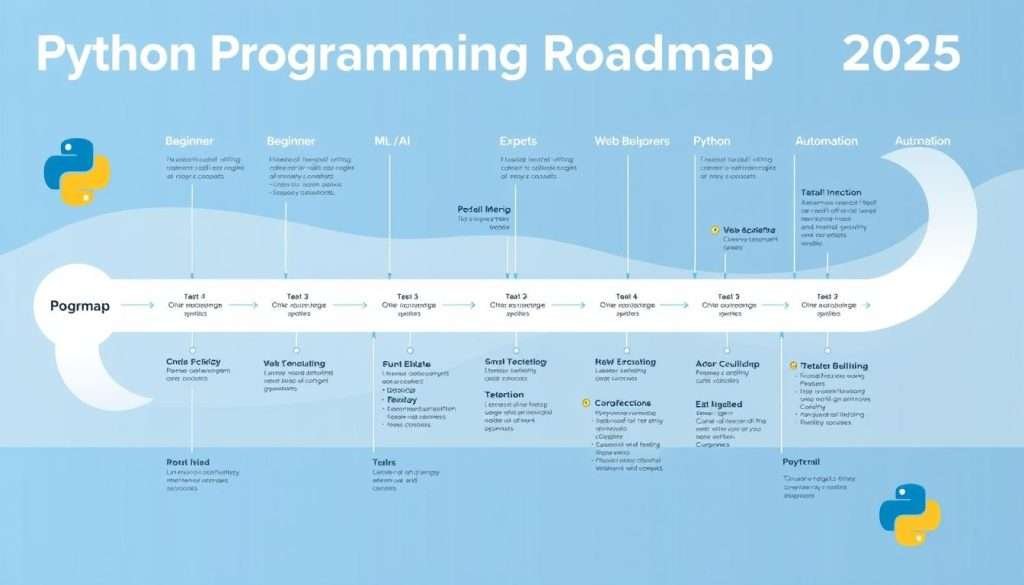
Visual Python Programming Roadmap
This visual roadmap provides a comprehensive overview of the Python learning journey in 2025, from fundamentals to specialized domains. Use it as a reference to track your progress and identify areas for further development.
Ready to Build Your Python Foundation?
Start with interactive exercises that reinforce fundamental concepts while building practical skills.
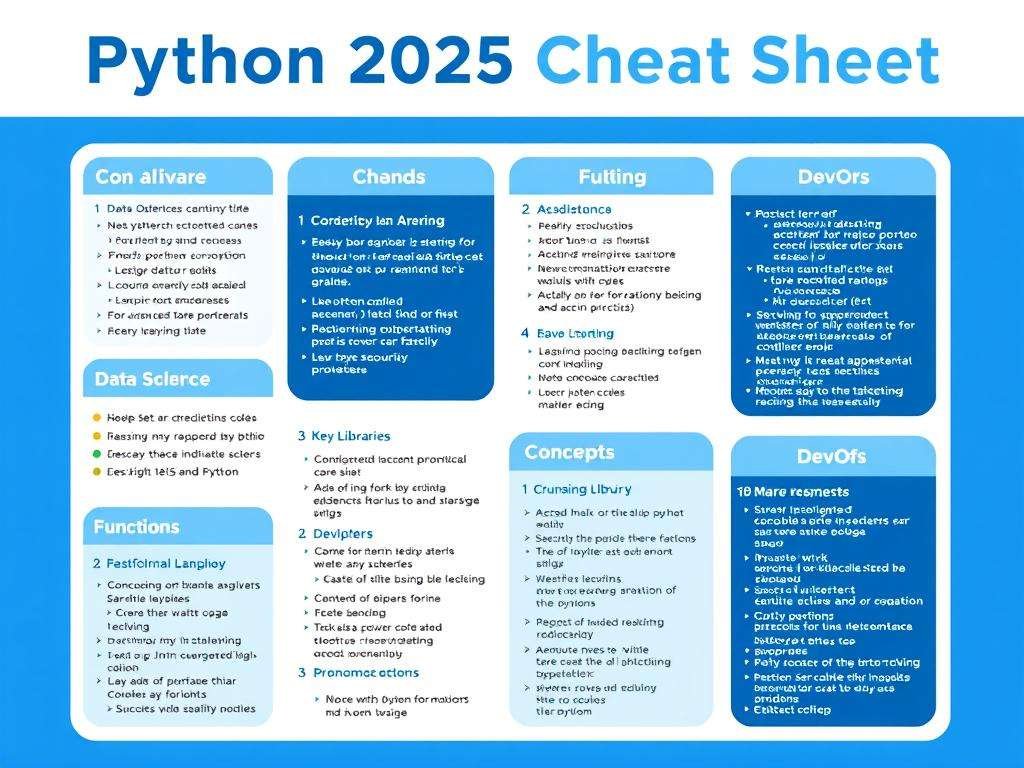
Python 2025 Cheat Sheet
This quick-reference guide summarizes the essential Python skills, libraries, and resources for 2025:
| Category | Must-Know | Nice-to-Have | Future Trend |
| Core Python | Python 3.10+, OOP, type hints, async programming | Metaprogramming, C extensions, memory optimization | Python 3.12+ features, JIT compilation |
| Data Science | Pandas, NumPy, Matplotlib, Scikit-learn | Polars, Dask, PySpark, advanced visualization | AutoML tools, streaming data processing |
| Machine Learning | PyTorch or TensorFlow, Scikit-learn, basic ML algorithms | Hugging Face Transformers, MLflow, feature stores | Quantum ML, federated learning, AI agents |
| Web Development | FastAPI or Django, SQL, RESTful APIs | GraphQL, WebSockets, microservices | Edge computing, WebAssembly integration |
| DevOps | Git, Docker, CI/CD basics, testing | Kubernetes, infrastructure as code, monitoring | GitOps, AI-powered DevOps, chaos engineering |
Top Learning Resources for Python in 2025
With countless Python resources available, it’s important to focus on high-quality, up-to-date materials. Here are the best resources for learning Python in 2025:
Online Courses
- Python for Everybody (Coursera)
- Complete Python Bootcamp (Udemy)
- Python Data Science Track (DataCamp)
- Deep Learning Specialization (Coursera)
- FastAPI Masterclass (Udemy)
Books
- Python Crash Course, 3rd Edition
- Fluent Python, 2nd Edition
- Python for Data Analysis, 3rd Edition
- Hands-On Machine Learning with Scikit-Learn, PyTorch, and TensorFlow
- Architecture Patterns with Python
Communities
- Python Discord Server
- r/learnpython and r/Python subreddits
- Stack Overflow
- PySlackers Slack community
- Local Python meetup groups
Practice Platforms
Coding Challenges
- LeetCode – Algorithm practice and interview prep
- HackerRank – Competitive programming challenges
- Exercism – Mentored coding exercises
- Advent of Code – Annual coding challenge event
- Project Euler – Mathematical programming problems
Project-Based Learning
- GitHub – Contribute to open-source projects
- Kaggle – Data science competitions
- Replit – Browser-based coding environment
- CodePen – Web development playground
- DataCamp Projects – Guided data science projects
Remember that consistent practice is more important than consuming endless learning materials. Choose a few high-quality resources and focus on applying what you learn through projects.
Ready to Build Your Python Foundation?
Start with interactive exercises that reinforce fundamental concepts while building practical skills.
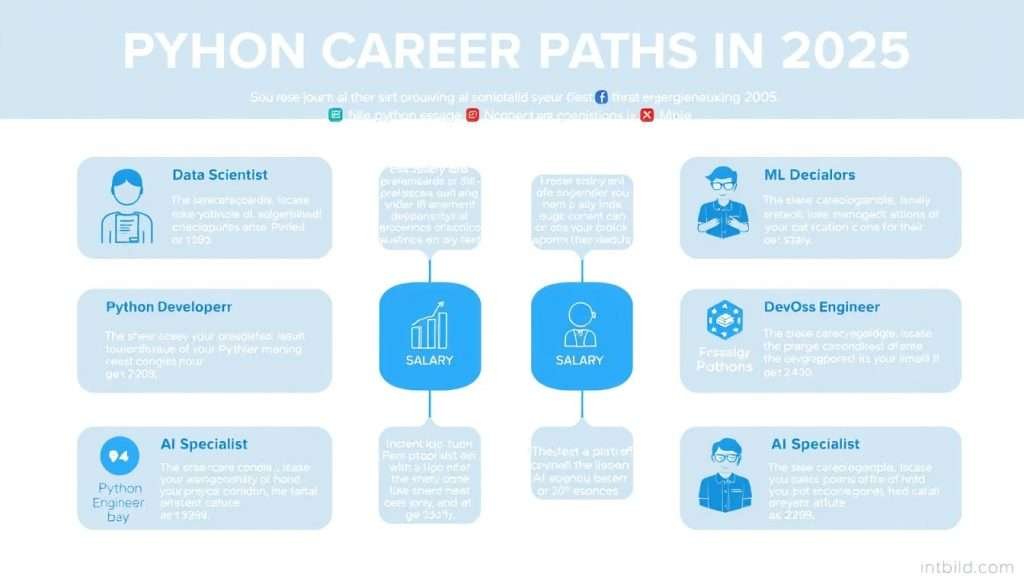
Python Career Paths in 2025
Python skills open doors to numerous career opportunities. Here are the most promising Python-related career paths in 2025:
Data Science & Analytics
Data Scientists and Analysts use Python to extract insights from complex datasets, build predictive models, and create data visualizations that drive business decisions. This path requires strong statistical knowledge alongside Python skills.
Key skills: Pandas, NumPy, Scikit-learn, SQL, statistics, data visualization
Machine Learning & AI
ML Engineers and AI Specialists develop intelligent systems that can learn from data. This rapidly growing field offers some of the highest salaries in tech, with specialized roles in computer vision, NLP, and reinforcement learning.
Key skills: PyTorch, TensorFlow, deep learning, MLOps, algorithm design
Backend Development
Python Backend Developers build the server-side logic that powers web applications. With frameworks like FastAPI and Django, Python has become a popular choice for creating robust, scalable web services.
Key skills: FastAPI/Django, databases, API design, security, testing
DevOps & Automation
DevOps Engineers use Python to automate deployment pipelines, infrastructure management, and monitoring systems. Python’s simplicity makes it ideal for writing scripts that glue together different parts of the development lifecycle.
Key skills: Automation scripting, CI/CD, cloud platforms, Docker, Kubernetes
Fintech & Quantitative Analysis
Financial institutions increasingly rely on Python for algorithmic trading, risk assessment, and fraud detection. Quantitative Analysts use Python to develop sophisticated financial models and trading strategies.
Key skills: NumPy, Pandas, financial modeling, time series analysis
Emerging: AI Agent Engineer
A new role focused on developing autonomous AI agents that can perform complex tasks with minimal human intervention. These engineers combine LLM expertise with traditional programming to create intelligent, goal-oriented systems.
Key skills: LangChain, LLM integration, prompt engineering, agent design
The most successful Python professionals in 2025 combine deep technical expertise with domain knowledge in fields like healthcare, finance, or manufacturing. Consider specializing in an industry that interests you to maximize your career potential.
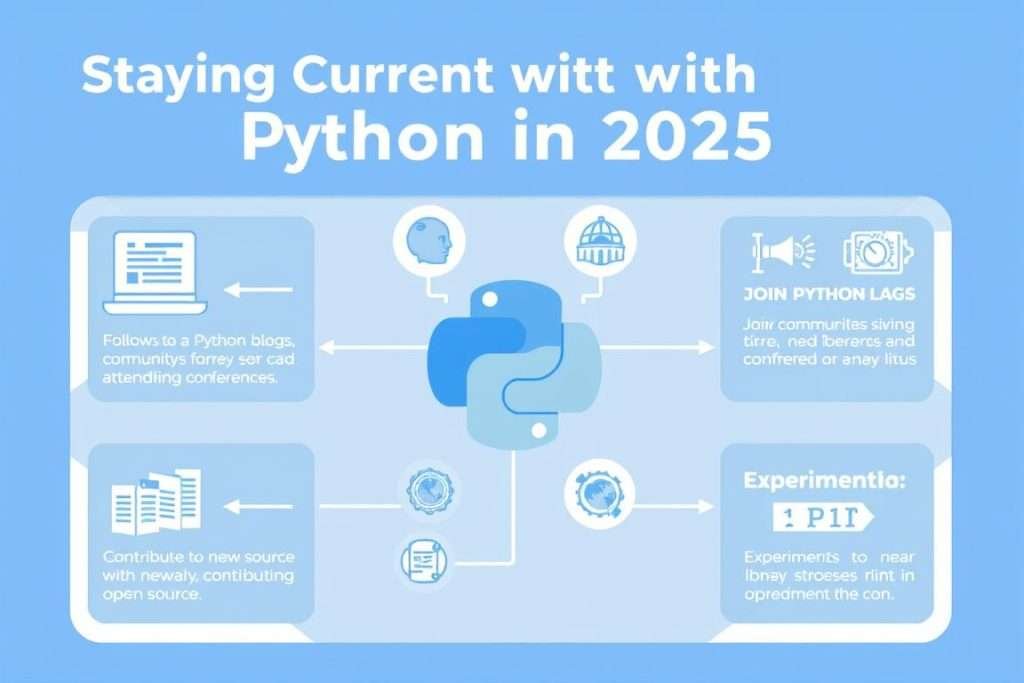
Staying Current with Python in 2025 and Beyond
The Python ecosystem evolves rapidly. Here are strategies to stay updated with the latest developments:
Information Sources
- Python Weekly newsletter
- Real Python blog and tutorials
- Python Software Foundation news
- GitHub trending Python repositories
- PyPI new package releases
- Tech conference presentations
Continuous Learning Habits
- Dedicate time weekly to explore new libraries
- Participate in code reviews
- Contribute to open-source projects
- Rebuild existing projects with new tools
- Follow Python core developers on social media
- Attend virtual or local Python meetups
Remember that you don’t need to learn every new library or framework that appears. Focus on understanding core concepts deeply, and you’ll be able to adapt to new tools as needed.
Conclusion: Your Python Journey Starts Now
Python’s versatility and accessibility make it an excellent investment for your programming future. Whether you’re just starting your coding journey or looking to specialize in cutting-edge fields like AI and data science, the roadmap outlined in this guide will help you navigate the Python ecosystem in 2025 and beyond.
The key to success is consistent practice, building real projects, and engaging with the Python community. Don’t be overwhelmed by the vast array of libraries and frameworks—start with the fundamentals, choose a specialization that excites you, and gradually expand your skills.
The Python ecosystem will continue to evolve, but the skills you develop following this roadmap will remain valuable. By focusing on future-proof programming practices and staying curious about emerging trends, you’ll be well-positioned for success in the dynamic tech landscape of 2025 and beyond.
Ready to Master Python in 2025?
Start your learning journey today with structured resources and join a supportive community of Python enthusiasts.